For financing options please visit CareCredit and apply through their platform. Principium financing options through
CareCredit will be available soon! Learn more

Esketamine Therapy

Esketamine Therapy

At Principium Psychiatry, we offer a form of ketamine therapy known as esketamine therapy. Our esketamine patients self-administer SPRAVATO™, an FDA-approved type of esketamine, in our office during their treatment appointments. This medicine serves as a new option for patients who have treatment-resistant depression.

Book an Appointment

What Is Esketamine?

Esketamine is a version of the ketamine molecule used to address treatment-resistant depression. It stimulates the production of glutamate, a neurotransmitter that creates new neural connections and influences many brain functions. Compared to ketamine, esketamine targets more brain connections and needs a lower dose to relieve depression symptoms. Scientists developed esketamine after finding that the anesthetic ketamine triggered glutamate production.

Is Esketamine FDA-Approved?

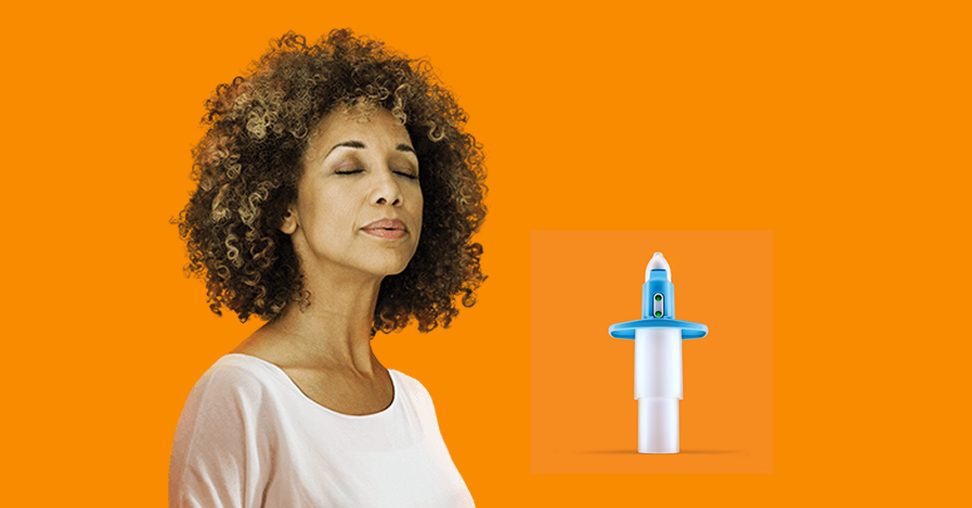
SPRAVATO™, a branded version of esketamine, has FDA approval. It comes in the form of a nasal spray that the patient takes under a doctor’s direct supervision.

Johnson & Johnson submitted five Phase 3 studies on the drug: three-short term studies, one maintenance study, and a long-term safety study. Two of those turned up positive results. One was a randomized trial in adults under age 65 with treatment-resistant depression who were started on an oral antidepressant and intranasal esketamine. After a month, roughly 70% of patients who received the treatment responded compared to just over half in a placebo group. The researchers considered an improvement of 50% or more on a common depression rating scale as a successful response.

As a result of findings like these, the FDA approved SPRAVATO™ for supervised use in March 2019. Because of esketamine’s potential side effects, the FDA requires doctors to distribute SPRAVATO™ under the Risk Evaluation and Mitigation Strategy (REMS).

The SPRAVATO™ REMS (Risk Evaluation and Mitigation Strategy)

To protect patients, SPRAVATO™ treatment has the following measures in place:

  • Patients may only receive and take SPRAVATO™ in a medically supervised setting
  • Pharmacies and health care organizations that distribute SPRAVATO™ must have special certification
  • Each patient receives detailed information on the potential severe side effects of SPRAVATO™
  • Every SPRAVATO™ patient must enroll in a registry

During a SPRAVATO™ treatment session, the doctor monitors the patient for side effects after administration. These symptoms vary in severity, depending on the patient. An esketamine treatment like SPRAVATO™ includes potential side effects.

What Are the Treatment Protocol and Dosage Recommendation for Esketamine?

A SPRAVATO™ treatment plan involves ongoing appointments where the patient self-administers the medicine. SPRAVATO™ comes in the form of a 28-milligram nasal spray device. Depending on how the patient reacts to the medication, they may take 56-milligram doses (two devices) or 84-milligram doses (three devices). For the first four weeks of treatment, the patient will visit twice a week for the induction phase, then once a week for the fifth to eighth weeks. After those first two phases, the doctor will recommend treatment once or twice a week.

Book an Appointment

Ketamine FAQs

IV ketamine infusions are considered an off-label treatment for depression, and as a result most insurance plans do not cover the cost of ketamine infusion therapy. Spravato® (esketamine) is FDA-approved for certain types of depression and may be covered by insurance; however coverage varies by plan and often requires prior authorization and treatment at a certified provider site.

In recent years, there has been a surge of information on the uses of ketamine for the treatment of depression. Ketamine is an anesthetic which has been on the market since the 1960s. Ketamine was introduced into clinical practice as an anesthetic that reliably brought about sedation for surgical purposes with little effect on respiration or the circulatory system. The name “ketamine” derives from two of the molecules found in ketamine’s molecular structure: a ketone and an amine.


It was first suggested in 2000 that ketamine may have antidepressant effects in humans. The suggestion was based on animal studies of depression showing that a neurotransmitter called glutamate was dysfunctional in depression. Other studies showed that NMDA, a drug that binds to glutamate receptors, relieved depression in humans. This led to the “glutamate hypothesis” about the origins of depression. Ketamine was known to bind to glutamate receptors.


A number of clinical trials support the use of ketamine for depression. These randomized, controlled clinical trials, have compared Ketamine to a placebo. Studies have shown that even one infusion of Ketamine is superior to placebo and achieves clinically meaningful reductions in depression rating scores. Other studies have shown that serial treatments with Ketamine (i.e. more than one infusion) can increase the response rate to the treatment. On the basis of this evidence, the American Psychiatric Association released a consensus statement on the use of Ketamine to treat depression: https://jamanetwork.com/journals/jamapsychiatry/article-abstract/2605202

Spravato® (esketamine) is an FDA-approved medication for treatment-resistant depression and depressive symptoms in adults with major depressive disorder. It is administered as a nasal spray in a certified medical setting under the supervision of a healthcare professional.

Ketamine infusions are a related treatment option that may also be used for depression. Ketamine itself is an FDA-approved medication that has been safely used for decades as an anesthetic. However, the use of intravenous (IV) ketamine to treat depression is considered “off-label.” This means that while the medication is FDA-approved for anesthesia, the FDA has not specifically approved IV ketamine infusions as a treatment for depression.

Off-label prescribing is common and legal in medicine. Once a medication is approved by the FDA, physicians may prescribe it for other conditions when, in their professional judgment, it is medically appropriate and supported by clinical evidence.

As explained by the U.S. Food and Drug Administration (FDA):

“Once the FDA approves a drug, healthcare providers generally may prescribe the drug for an unapproved use when they judge that it is medically appropriate for their patient.”

For the treatment of depression, ketamine is administered at much lower doses than those used for anesthesia, and treatment is conducted under medical supervision.

Studies show that approximately 3 out of 4 patients will have a positive response to ketamine treatment for depression.

You can schedule an evaluation with one of our clinicians by calling our office at:

Midtown Manhattan, Lower Manhattan, Greenwich, CT: (212) 335-0236

The Hamptons and Garden City, Long Island: (631) 247-3002

Santa Monica, CA: (310) 564-0110 ext. 1

Alternatively, you can submit a booking request online and a member of our Patient Experience team will reach out.

Ketamine is given in small doses for the treatment of depression. As such, a typical side effect is mild sedation. Some patients complain of mild nausea, which is easily treated with anti-nausea medication. Some patients have mild elevations or reductions in blood pressure. Dr. Cohen will discuss with you side effects in detail during your consultation.

The typical treatment course involves 6 infusions, which are given 2 to 3 times per week (for a period of 2-3 weeks). In some cases, further infusions are given during the initial course.

At Principium Psychiatry, we offer Ketamine infusions in our private, comfortably appointed office located off Columbus Circle and Central Park South in the heart of New York City. We are located directly across the street from Carnegie Hall.

During the infusion, a multidisciplinary team will be present, including a registered nurse and a psychiatrist or psychiatric nurse practitioner. Your blood pressure, heart rate, and blood oxygen levels will be measured continuously during the infusion. The team will be closely monitoring you. You will be free to engage in conversation, close your eyes and relax, or listen to calming music. You will not fall asleep during the treatment.

Ketamine is rapidly metabolized. Within ten to fifteen minutes after the infusion you will feel substantially more alert. Patients generally report that a full recovery to normal activities takes about 1 hour. There is some individual variation in responses to ketamine.

After you finish your initial course of 6 or more infusions, you and the treatment team will make a plan for follow-up care. Some patients will return for further infusions on an as needed basis (typically several months or more after the initial course), while other patients with particularly severe symptoms will be placed on a regular maintenance treatment schedule (typically monthly infusions).

Yes, Ketamine is safe to administer with most medications.

No, administered at small doses in a medical setting, there is no evidence that Ketamine is addictive. In contrast, those who abuse ketamine recreationally do so at very high doses to induce psycho-active affects.

Yes, clinical experience supports that Ketamine can be effective for patients with treatment resistant depression, including those who have already tried ECT and TMS without benefit.

At Principium Psychiatry, we offer both TMS and Ketamine treatment.

We offer a detailed comparison of the two treatments in our blog: Ketamine vs TMS — Which Treatment is Best for me. You will also find additional useful information about ketamine and TMS on our blog.

In general, ketamine is safe for patients with a variety of health conditions. If there are concerns related to your cardiovascular health or other medical issues, we may recommend a medical check-up to ensure that ketamine therapy is safe and appropriate for you.

While still in preliminary studies, there has been scientific evidence showing that IV infusions of ketamine can be effective in treating generalized anxiety disorder and social anxiety disorder. Our team at Principium Psychiatry has treated many patients who, in addition to having depression, also have varying degrees of anxiety. Throughout their infusion protocols, we have found that not only do their depressive symptoms improve, but so does their anxiety.

Some patients ask, “Why does it have to be IV? I don’t like needles!”

IV is the best route for your brain to receive ketamine because of something called bioavailability. In addition, it is also more effective, more precise, and safer for you.

Receiving a medication intravenously is the only way to have 100% bioavailability. Let’s take a look at the different bioavailability percentages based on what route you receive ketamine:

Intravenous: 100%
Intranasal: 25-50%
Sublingual (under the tongue): 30%
Orally (by mouth): 16-24%

When we give ketamine intravenously, we know exactly where your entire dose is going: straight to your brain. The same cannot be said for other forms of ketamine.

IV ketamine is a safe and effective approach in using ketamine to treat depression. You are in a comfortable setting with healthcare providers with you the whole time, the potential for side effects is low, and you are certain that the dose you receive is the dose that is going to your brain, maximizing the benefits of this cutting-edge treatment.

Why Do Patients Choose Principium Psychiatry for Esketamine Treatment?

Patients with depression and other mental health conditions come to Principium Psychiatry for treatment because of our:

  • Expertise: Dr. Cohen and the Principium team have experience in a broad range of psychiatric specialties. They will work with you to create a personalized treatment plan based on the best approaches for you.
  • Innovative approaches: Principium offers the latest evidence-based treatments in psychiatry. These services include esketamine therapy and TMS.
  • Convenient, beautiful locations: Four office locations, one in Midtown Manhattan near Grand Central Station, one in Lower Manhattan located along Wall Street, a location in Greenwich Connecticut and our newest location in Santa Monica California.

Schedule Your First Appointment

Schedule a consultation with our team today by making an appointment online.

Book an Appointment